Serving San Francisco, CA and surrounding areas. (628) 895-9188
Holes and crumbling edges in your driveway only grow bigger through the rainy season. We patch them right - base prep, hot-mix asphalt, and sealed edges.
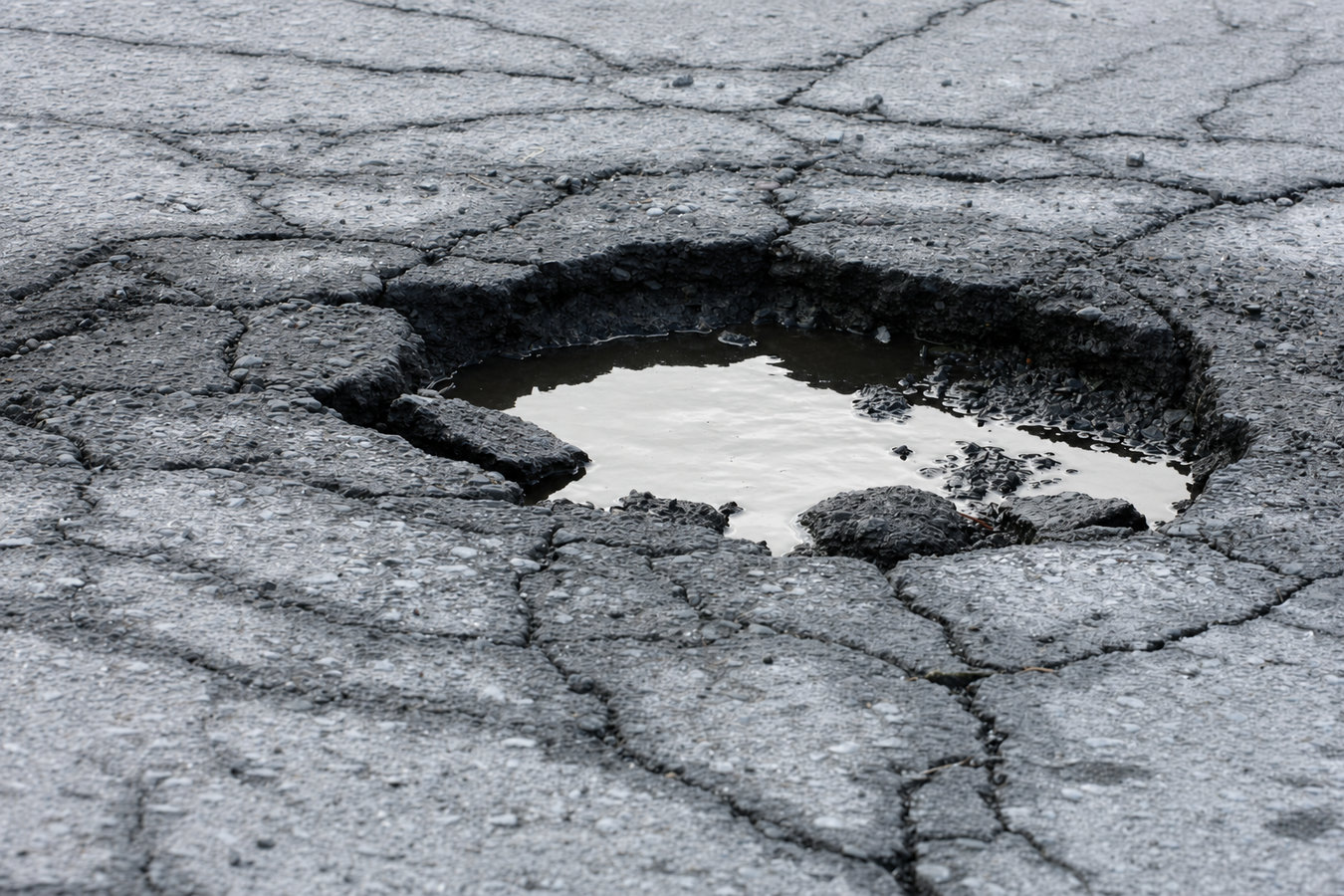
Pothole repair in San Francisco means saw-cutting the damaged area to clean edges, removing broken material, preparing the base underneath, and filling with hot-mix asphalt - most residential jobs are completed in a single day, and the surface is ready to drive on within a few hours.
San Francisco driveways take a beating. The combination of wet winters, clay soils that shift with the seasons, and steep grades on hillside lots creates conditions that eat away at asphalt faster than most homeowners expect. By the time a crack becomes a visible hole, water has already been working at the base underneath.
The good news is that isolated pothole damage is very fixable - and a proper repair done in the dry season will hold through years of normal use. If larger sections of your driveway are failing, our asphalt repair service covers broader surface failures, and we can help you figure out which approach fits your situation.
A bowl-shaped break in the asphalt where material has come loose and fallen away is the clearest sign. In San Francisco, these often appear after the rainy season ends. If you feel a thud or jolt when you drive over a spot, that area needs attention before the damage grows.
Thin cracks can widen under ground movement and traffic until chunks of asphalt break free. Once material starts coming loose, the hole grows quickly with every vehicle pass. Catching it at the crumbling-chunk stage is far cheaper than waiting until the base is exposed.
When asphalt sags or breaks down, it creates a depression that collects water. In San Francisco's rainy season, that pooled water accelerates the damage cycle - softening the base and expanding the failure. A low spot that holds water after rain is a pothole in progress.
The transition where your driveway meets the sidewalk or street takes heavy stress from turning vehicles. If that edge is breaking apart or has developed a lip that catches tires, it is a safety issue as well as a structural one - especially common on San Francisco's hillside driveways where water runs along the edge.
Every pothole repair we do starts with an honest assessment. We look at the hole, but we also look at the base underneath - because a patch placed on a weak or wet base will fail again within months. If the base needs work, we tell you that upfront and include it in the scope. Our crew saw-cuts or mills the damaged area to create clean, stable edges, removes all loose material, and compacts fresh hot-mix asphalt in lifts until the patch sits flush with the surrounding surface. We then seal the edges where new asphalt meets old - the point where water most often gets back in.
For driveways where pothole damage is part of a broader surface failure, we can scale the work up accordingly. Our grading and excavation service handles full base rebuilds on driveways that have reached that point, while our broader asphalt repair service covers everything from surface patching to full overlay preparation. We will tell you honestly which scope your driveway actually needs.
Ideal for driveways with one or two isolated failures where the surrounding surface is still structurally sound.
Best for driveways with several potholes or a cluster of surface failures that need addressing in a single visit.
The right choice when the base beneath the pothole is soft, washed out, or has been compromised by repeated water infiltration.
San Francisco's climate and terrain are a unique combination. The rainy season runs roughly November through April, and water is asphalt's biggest enemy - it seeps into small cracks, softens the base, and traffic does the rest. Most pothole damage shows up or worsens between January and March. But unlike colder climates where freeze-thaw cycles do the breaking, the real culprit here is ground movement. The city sits on a mix of bedrock, sandy fill, and bay mud, and the ground shifts subtly but constantly - that movement stresses asphalt from below. A contractor who understands San Francisco's soil conditions will assess whether the base needs stabilization before patching, not just fill the hole and move on.
Steep grades add another layer of complexity. Many driveways and private lanes in neighborhoods like Daly City and across the hillier parts of Oakland run up significant slopes where fresh asphalt can shift before it fully sets, and water runoff accelerates edge erosion. Proper compaction technique and thorough edge sealing matter far more on a hill than on a flat surface. We have been working on hillside driveways in the Bay Area since 2017, and we know what it takes to produce a patch that holds on a grade.
Scheduling also matters in this city. San Francisco's marine layer keeps surfaces cool and damp even in summer - particularly in the Sunset, Richmond, and other western neighborhoods. Experienced local contractors account for this and schedule work when conditions are right, rather than rushing a repair that needs dry weather to cure properly. We plan around the weather so your patch gets the best possible start.
Call or message us and describe what you are seeing - size, location, and how long the damage has been there. We schedule a brief on-site visit to look at the damage in person, because the depth of the failure and the condition of the base cannot be judged from a photo. We reply within one business day.
After the site visit you receive a written estimate covering scope, materials, and timeline. We will explain clearly whether the repair requires only a surface patch or whether the base needs to be rebuilt first - no surprises when work begins.
We schedule the work during a dry window - ideally when no rain is forecast for at least 24 to 48 hours after the repair. Summer and early fall are the most reliable windows in San Francisco, but we can work in spring if a dry stretch lines up.
The crew saw-cuts the damaged area to clean edges, removes all loose material, compacts the base, and places hot-mix asphalt in lifts until the patch is level with the surrounding surface. Edges are sealed before the crew leaves. The area is ready to drive on within a few hours.
We will come out, assess the damage honestly, and give you a written quote. No obligation, and no upsell to a full replacement if a patch is all you need.
(628) 895-9188We work on steep, narrow San Francisco lots where most flat-ground contractors struggle. Proper compaction on a grade and thorough edge sealing on a hillside driveway require specific technique - and we have been doing it in the Bay Area since 2017.
We use hot-mix asphalt and commercial compaction equipment for permanent repairs, not the cold-mix products that loosen over time. That choice is the single biggest factor in whether a patch holds for years or needs redoing within a season.
Our license is current and verifiable through the California Contractors State License Board at cslb.ca.gov. Hiring a licensed contractor protects you legally and guarantees the work meets state standards.
We will tell you if a driveway only needs a patch - even when a full replacement would make us more money. San Francisco homeowners deal with enough deferred-maintenance pressure without being upsold unnecessarily. Get a second opinion if you ever feel pushed.
San Francisco driveways face conditions that flat-climate contractors are not always prepared for. Our combination of local experience, proper materials, and honest scoping means you get a repair that actually holds - not one you are calling about again next spring. Learn more about what the National Asphalt Pavement Association considers best practice for residential patch repairs, or check our license status at cslb.ca.gov.
When pothole damage points to a failed base, full excavation and regrading creates the stable foundation your driveway needs before new asphalt goes down.
Learn MoreBroader surface failures beyond isolated potholes - from widespread cracking to deteriorated edges - are handled under our full asphalt repair service.
Learn MoreSan Francisco's dry season is the ideal window - lock in your repair date now and protect your driveway before the next wet season opens up the damage further.
