Serving San Francisco, CA and surrounding areas. (628) 895-9188
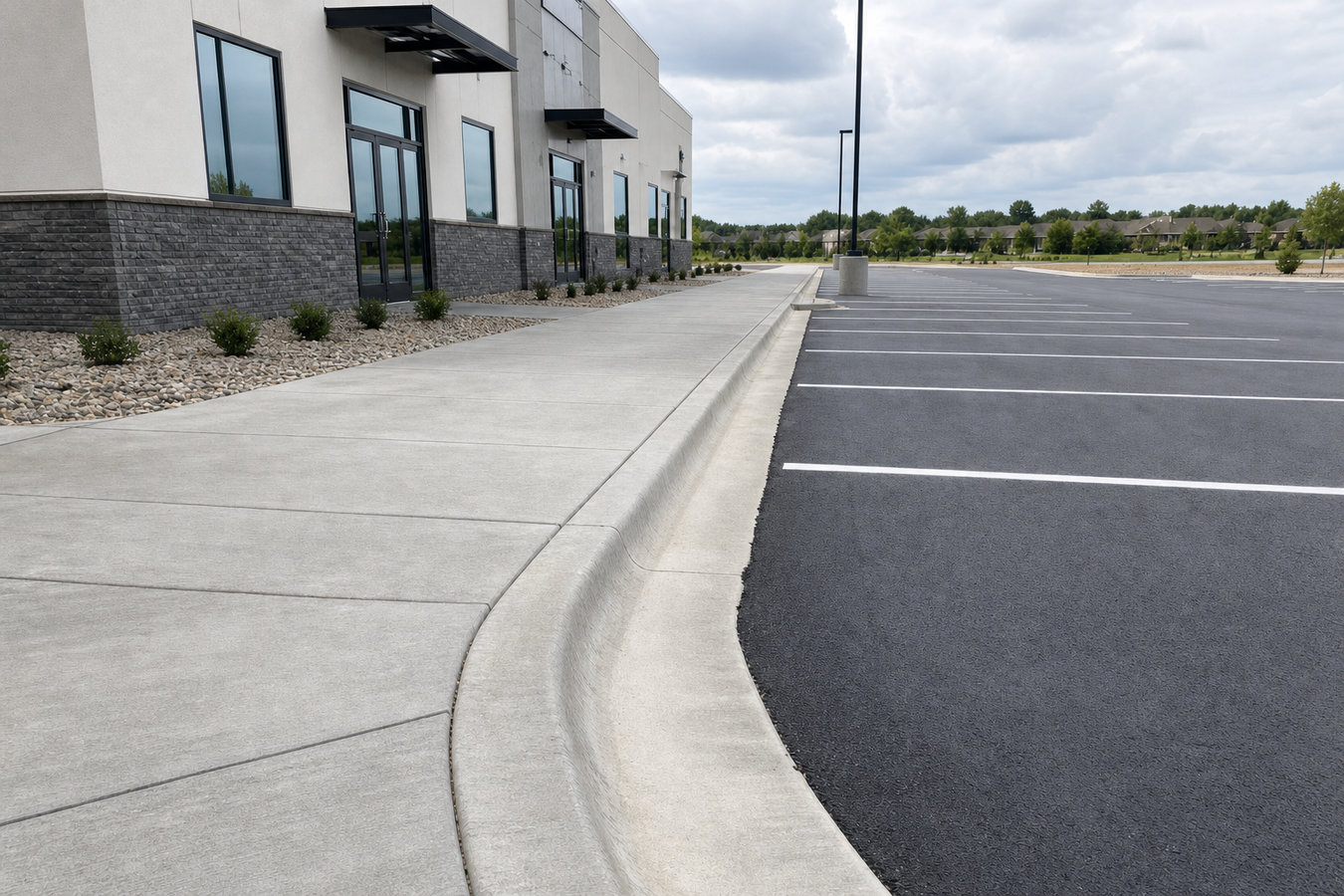
Cracked, raised, or city-flagged sidewalk? We handle the permit, the pour, and the prep - so your property is safe and compliant.
Concrete curbing and sidewalk work in San Francisco means forming, pouring, and finishing concrete along property edges or walkable paths, with most residential jobs taking one to three days of active work once permits are in hand.
San Francisco places sidewalk maintenance responsibility on the property owner - not the city. If the sidewalk fronting your home is cracked, raised, or has a trip hazard, the city can require you to fix it at your expense. The city runs an active inspection program and sends notices. Acting on your own schedule is almost always less stressful and less expensive than working under a city deadline.
If you are also looking at cracks in your driveway surface, our asphalt milling service is often scheduled alongside concrete work for a complete property refresh.
San Francisco's sidewalk inspection program flags properties where the public walkway is cracked, raised, or uneven. If you have received a notice - or can see obvious damage along your front sidewalk - acting before the deadline almost always costs less and gives you more choice of contractor.
Sections of concrete that have shifted up or down relative to each other create a trip hazard. In San Francisco, clay soil movement and tree roots are common culprits. Uneven sections that catch a toe or a wheelchair wheel need attention before someone gets hurt.
Hairline cracks in older concrete are normal. But wide cracks you can fit a finger into, or cracks that run diagonally across a slab, signal that the base has shifted or the original work lacked proper control joints. These cracks let in water, which accelerates damage through San Francisco's rainy winters.
Curbing that is chipping, flaking, or breaking apart at the edges no longer protects lawn edges, directs water properly, or defines the property line cleanly. Deteriorated curbing looks neglected from the street - a real concern in a city where buyers and neighbors notice street-level details.
We handle the full range of concrete curbing and sidewalk work for San Francisco residential and commercial properties - from spot repairs on a single flagged panel to complete front-yard curbing and walkway installations. Every job starts with a proper base assessment. Clay soils in San Francisco move with the seasons, and a slab that is not built over a stable, well-draining base will crack no matter how good the pour looks on day one. We prepare the ground correctly the first time.
We also handle the city's permitting process. Any work touching the public sidewalk or curb in San Francisco requires a permit from the city's public works department - a step many homeowners do not know about until work is already underway with the wrong contractor. We pull the required approvals before breaking ground. If your property has paved surfaces in need of attention beyond concrete, our driveway paving team can address asphalt areas on the same project.
Best for property owners who have received a city notice or have one to three panels that are cracked, raised, or trip-hazard flagged.
Suits properties where most of the existing sidewalk run is deteriorated, heaved by tree roots, or so old that patching individual panels no longer makes sense.
Ideal for homeowners who want to define lawn edges, protect garden beds, or give the front of their property a clean, finished look from the street.
For property owners who want a surface that goes beyond utility - stamped patterns, exposed aggregate, or colored concrete that adds curb appeal alongside function.
San Francisco places sidewalk maintenance responsibility on property owners - and the city actively enforces it. The western and southern parts of the city sit on clay-heavy soils that swell when wet and shrink when dry. That seasonal ground movement is the primary reason sidewalks crack and heave here, far more than freeze-thaw cycles that drive damage in colder climates. Mature street trees add to the problem in densely planted neighborhoods, with root systems that lift concrete in wave patterns over time. A contractor who understands Bay Area soil conditions prepares the base to work with the ground rather than against it - and that preparation is what separates work that lasts two years from work that lasts two decades. For properties in Daly City, the same clay soil conditions apply, and property owners there face identical maintenance responsibilities.
In San Francisco's dense neighborhoods, street-level presentation matters. Whether you are in the Sunset, the Mission, Noe Valley, or anywhere buyers and neighbors walk past your property, the condition of your sidewalk and curbing is one of the first things people notice. Fresh concrete removes the signal of deferred maintenance and replaces it with a clean, finished look that holds up through rainy season after rainy season. Homeowners in South San Francisco face similar urban density and similar scrutiny from buyers - the value of a well-maintained concrete frontage is consistent across the peninsula.
For guidance on California contractor licensing requirements, see the Contractors State License Board (CSLB). For sidewalk permit information specific to San Francisco, visit sf.gov.
Call or message us and describe the work - how long the sidewalk or curbing run is, whether there is existing concrete to remove, and whether the work touches the public right-of-way. We schedule a site visit within one business day to measure the area, assess the base, and give you a written estimate with no pressure to commit.
If your project touches the public sidewalk or curb, we apply for the required permit from San Francisco's public works department before work begins. Permit review typically adds several days to a few weeks. We keep you updated on the timeline so you know exactly when work can start.
On day one, the crew removes any existing concrete and hauls away the debris - most Bay Area contractors recycle broken concrete rather than sending it to landfill. We grade and compact the base, add gravel fill where needed, then form and pour. Control joints are placed at this stage to guide how the slab expands and contracts over time.
New concrete needs time to cure - plan on keeping foot traffic off for at least a few days, and avoid vehicle traffic for a week or more. If a permit was pulled, a city inspector may need to sign off before the job is officially closed out. We coordinate that inspection and do a final walkthrough with you before we leave.
We handle the permit, the base prep, and the pour - free written estimate, no pressure.
(628) 895-9188Any work touching the public right-of-way in San Francisco requires a city permit - a step many homeowners do not know about until they hire a contractor who skips it. We handle the permit application and coordinate inspections as a standard part of every sidewalk project. You do not have to track it yourself.
Clay-heavy soils in San Francisco's western and southern neighborhoods move with the seasons. We assess the base before every pour and add compacted gravel fill where needed. That preparation is what separates concrete that lasts two decades from concrete that cracks again within two winters.
We have been working across San Francisco's neighborhoods - Sunset, Richmond, Noe Valley, the Mission, and beyond - long enough to know how the city's soil conditions, steep grades, and tight access requirements affect concrete jobs. That local experience is in every estimate we write.
Our estimates spell out demolition and removal, base preparation, slab thickness, permit fees, finishing details, and cleanup. A quote that leaves out base prep or permit costs looks lower at first - and costs more later. We are transparent about what is included so you can compare fairly.
When you hire us for concrete curbing or sidewalk work, you get a team that handles the city paperwork, prepares the base for San Francisco's specific soil conditions, and stands behind the finished product. That combination is why our customers call us first when the next concrete project comes up.
Remove the damaged top layer of an existing paved surface so a fresh asphalt layer bonds to a solid, properly profiled base.
Learn MoreInstall or replace a residential driveway with hot-mix asphalt suited to San Francisco's hillside grades and tight urban lots.
Learn MoreWe handle the permit, the base, and the pour. Call now for a free, no-pressure estimate while our calendar still has openings.
