Serving San Francisco, CA and surrounding areas. (628) 895-9188
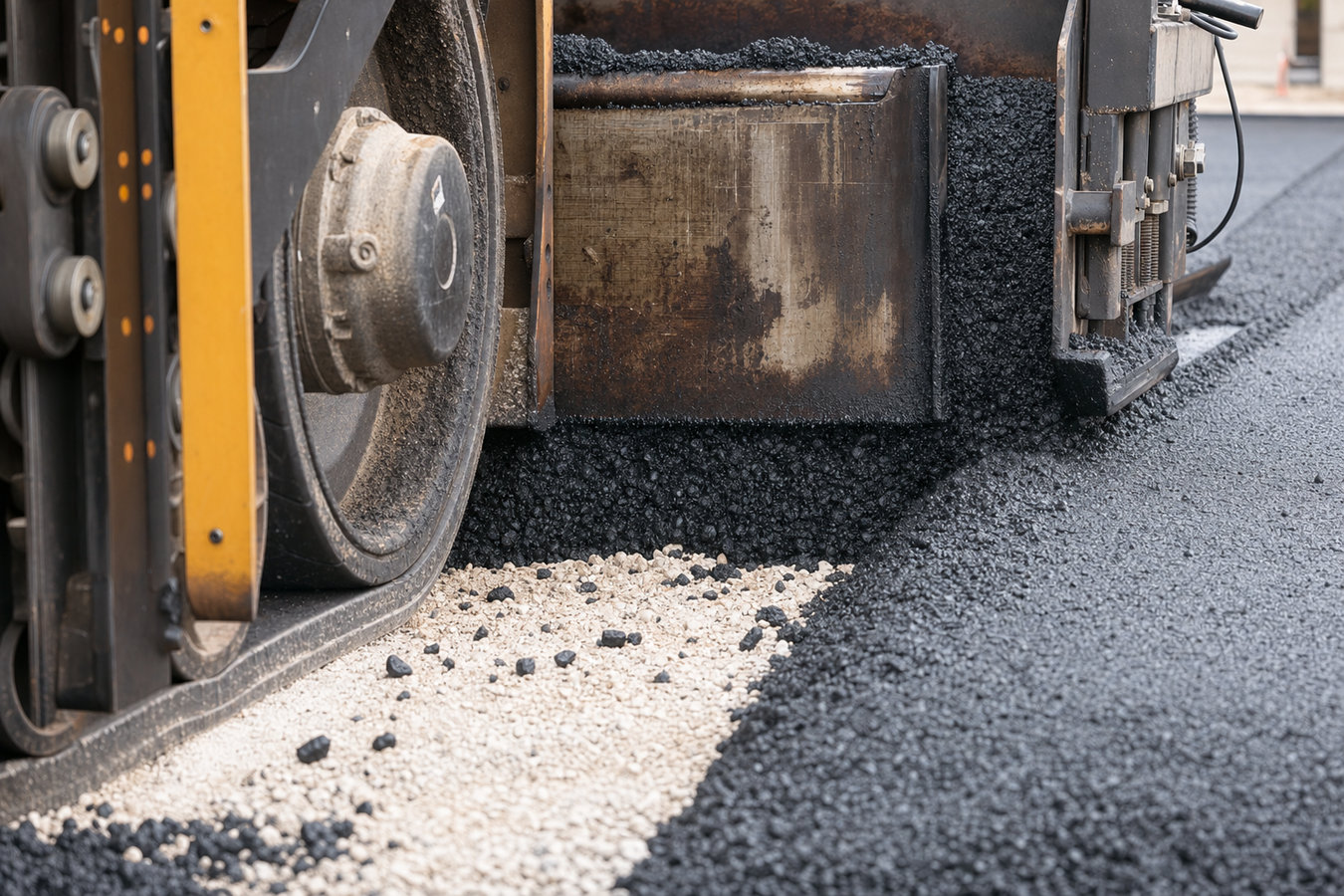
Cracked, potholed parking lots cost you customers and create liability. We repave commercial surfaces properly - permits, base work, drainage, and all.
Commercial asphalt paving in San Francisco means installing or replacing a smooth, durable surface on a parking lot, private road, loading area, or similar business property - most lots are completed in one to three days depending on size and how much base work the ground requires. A crew removes the old surface if needed, prepares and compacts the base, then lays hot asphalt mix in layers and compacts it with heavy rollers. The result is a solid, even surface that handles regular vehicle traffic.
What separates a commercial paving job that lasts 20 years from one that starts failing in three is almost entirely the base preparation. In San Francisco, where much of the city sits on fill soils and bay mud that shift over time, the base needs to be designed for local ground conditions - not generic specs from a flat suburban project. If your existing surface is showing widespread cracking or recurring potholes, the problem is usually below the asphalt, not just on top of it. Pair a new surface with ongoing parking lot maintenance to protect your investment for the long term, and consider parking lot paving if you need a complete surface replacement including striping and ADA compliance work.
When cracks spread into a web-like pattern across your surface, the pavement has broken down past the point where simple crack filling helps. In San Francisco, this often traces back to ground movement or a base that was never adequate for local soil conditions. Repaving - not patching - is the right fix at this stage.
San Francisco's rainy season runs from fall through spring. If your lot holds standing water after a storm, the surface has lost its proper slope or the drainage has failed. Pooling water accelerates asphalt breakdown and creates slip hazards for customers and employees - a new paved surface with correctly designed drainage solves both problems.
Potholes and depressions signal that the base beneath the asphalt has failed, not just the surface layer. If you are filling the same spots season after season, repeated patching is not addressing the cause. A full repave with proper base work is the more cost-effective long-term answer.
Asphalt that has reached the end of its useful life becomes brittle, faded, and prone to cracking. If your lot was last paved more than 15 to 20 years ago and is showing widespread deterioration, you are past maintenance and into replacement territory. Getting ahead of a full failure is almost always cheaper than waiting until the base is also damaged.
Our commercial paving work covers parking lots, private roads and alleys, loading areas, and new asphalt installations for properties that have never been paved. Every job includes a site visit to assess ground conditions, drainage needs, and access constraints before we quote - no remote estimates. San Francisco's dense urban environment means equipment access requires planning, and our crews have experience working in tight city sites where staging space is limited and neighboring properties are close. A new surface also benefits from a parking lot maintenance plan to protect the investment with periodic sealing and crack filling.
Drainage design is built into every commercial project. A properly paved surface slopes water toward drains or off the edges - poor drainage is one of the most common causes of early asphalt failure, and it is also a stormwater compliance issue in San Francisco. We design grading so water moves away from your building, not toward it. For properties that also need a complete overhaul including striping, ADA-compliant spaces, and curbing, parking lot paving covers the full scope in one coordinated project.
For commercial properties where widespread cracking, base failure, or pooling water means the existing surface cannot be maintained - a full replacement with properly designed drainage.
For multi-unit buildings, business campuses, or urban properties with private access roads that need a smooth, durable surface for regular vehicle traffic.
Designed for commercial properties that need a heavy-duty surface at loading bays and truck access points, with base thickness specified for the anticipated load.
For undeveloped or previously unpaved areas where grading, base installation, and fresh asphalt are needed to create a usable surface from the ground up.
Most commercial paving contractors learn their trade on flat suburban lots with easy truck access and straightforward soil conditions. San Francisco is a different job. Much of the city sits on fill soils and bay mud that shift with seismic activity and seasonal changes - that ground movement is the dominant reason asphalt cracks and heaves here, not freeze-thaw cycles as in colder climates. A base designed for a flat valley in the Central Valley will not hold up on fill ground in SoMa or the Mission. The city is also one of the most densely built in the country, which means access for paving equipment takes planning, permit requirements around right-of-way work are real, and stormwater management rules apply to how your new surface is graded. Businesses in South San Francisco, CA and Emeryville, CA face similar urban constraints and benefit from the same locally experienced approach.
San Francisco's mild but reliably wet winters - the rainy season runs roughly November through April - mean paving must be scheduled during the dry months. Projects booked for late spring or summer get the best installation conditions and avoid the risk of rain interrupting the work mid-project. If you are planning a paving project for next year, contacting contractors in late winter to get on their schedule early is the most reliable way to secure a slot before the busy season fills. The National Asphalt Pavement Association publishes guidelines on commercial paving best practices that any qualified contractor should be familiar with.
We visit your property in person before quoting - no remote estimates. We assess the size of the area, the condition of the existing base, how water currently drains, and any access constraints specific to your San Francisco site. You receive a written estimate that covers removal, base work, asphalt thickness, drainage, and any permit costs. We reply within one business day.
If your project touches public sidewalk, a curb cut, or street right-of-way, we identify the required approvals and handle the permit process for you. We build permit lead time into the project schedule so nothing delays your start date.
We remove the old surface if needed, grade and compact the base thoroughly - this step determines how long your new pavement lasts. The paving crew then lays hot asphalt mix in passes with a paving machine and compaction rollers. The area will be off-limits to vehicles during this phase.
Light foot traffic is typically possible the same day. Passenger vehicles can return after 24 to 48 hours; heavy trucks may need to wait longer. We advise on when to apply a sealcoat - typically several months after installation - and what a maintenance schedule looks like to protect your investment for the long term.
We visit your site in person, account for local soil conditions and permit requirements, and give you a clear written estimate with no surprises.
(628) 895-9188We carry a current California contractor license, verifiable at cslb.ca.gov. In San Francisco, where permit and right-of-way requirements are real, a licensed contractor is the only contractor who can do this work legally and protect you if something goes wrong.
San Francisco commercial properties often have tight access, narrow alleys, adjacent structures, and very limited staging space. We have paved urban sites across the city and know how to get equipment in and out of constrained locations without damaging neighboring property or causing neighborhood disruptions.
Much of San Francisco is built on fill soils and bay mud that shift over time. We design base preparation and asphalt thickness for local ground conditions, not generic specs. That preparation is what determines whether your new surface holds up or cracks within a few years.
San Francisco has real stormwater management requirements for commercial paving projects. We identify what approvals are needed before the crew shows up and design drainage to comply - so you do not get a stop-work order or a compliance issue after the project is complete.
Verify any California paving contractor's license at cslb.ca.gov before signing anything. Every project we take on starts with an in-person site visit and a written estimate that accounts for the specific conditions of your San Francisco property.
Ongoing maintenance programs - crack filling, resealing, and surface inspections - that extend the life of newly paved commercial surfaces.
Learn MoreComplete parking lot replacement including striping, ADA-compliant spaces, curbing, and drainage design for full-scope commercial projects.
Learn MoreCall today for a free on-site estimate - the dry season books up fast and waiting until summer means longer lead times.
